Building Your Executive Career

The Morning After Retirement
On his first Monday after retirement, Colonel Antonio Reyes woke up at exactly 4:45 in the morning.
For more than thirty years, his body had learned that time without an alarm clock.
He made coffee.
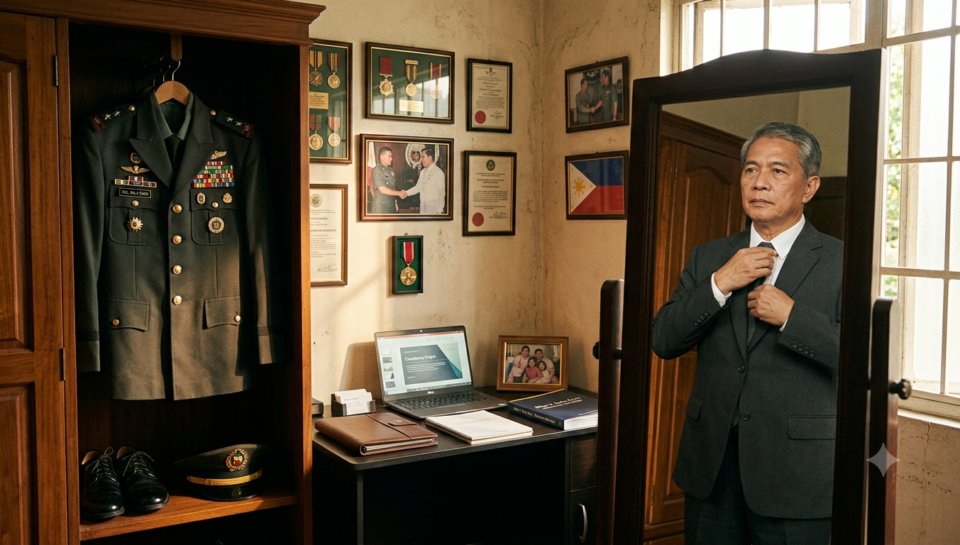
Ironed a polo shirt instead of a camouflage uniform.
Looked at himself in the mirror.
For the first time in decades, there were no rank insignias on his shoulders.
No name tape.
No command responsibility waiting outside the door.
His wife smiled.
“So… what are your plans today?”
He paused.
“I honestly don’t know.”
For thirty years, someone had always needed him.
There were operations to supervise.
Briefings to attend.
Personnel to mentor.
Communities to protect.
Emergencies to manage.
His calendar had always been full.
Now it was completely empty.
Friends congratulated him on retirement.
Former colleagues joked that he could finally relax.
Some suggested golf.
Others recommended travel.
But deep inside, Colonel Reyes knew something they didn’t.
He wasn’t ready to stop working.
Not because he needed another paycheck.
Because he still had something to offer.
He still wanted to lead.
Six Months Later
Retirement turned out to be more difficult than he expected.
Not financially.
Professionally.
Over six months, Colonel Reyes submitted applications to several large corporations.
Banks.
Manufacturing companies.
Property developers.
Multinational firms.
Logistics companies.
Shopping mall operators.
He was confident.
After all, he had commanded hundreds of personnel.
Managed multimillion-peso resources.
Led disaster response operations.
Worked with national government agencies.
Handled crises that most corporate executives would never experience.
His résumé spoke for itself.
Or so he thought.
The calls rarely came.
When interviews did happen, they often ended with the same response.
“We’ll get back to you.”
Sometimes they never did.
One recruiter finally gave him honest feedback.
“Sir, your experience is impressive. We just aren’t sure how it translates to our business.”
Those words stayed with him.
Not because they were insulting.
Because they were revealing.
For the first time in his career, Colonel Reyes realized that the corporate world wasn’t questioning his leadership.
It simply didn’t understand how his leadership fit into its environment.
That realization changed everything.
The Invisible Career Gap
Every year, thousands of professionals retire from the Armed Forces of the Philippines (AFP), Philippine National Police (PNP), Bureau of Fire Protection (BFP), Bureau of Jail Management and Penology (BJMP), Philippine Coast Guard (PCG), and other government agencies.
Many possess decades of operational excellence.
They have managed crises.
Protected communities.
Led large organizations.
Made life-and-death decisions under pressure.
By every reasonable standard, they are leaders.
Yet many discover that the transition into corporate security is more challenging than expected.
Why?
Because operational excellence and executive readiness are not always the same thing.
The corporate world doesn’t automatically recognize the language of military or law enforcement leadership.
It speaks a different language.
A language built around governance.
Business strategy.
Enterprise risk.
Financial performance.
Stakeholder confidence.
Regulatory compliance.
Operational resilience.
This isn’t a criticism of public service.
It’s simply the reality of moving from one leadership environment into another.
The good news is that this gap can be bridged.
But first, it must be understood.
The Biggest Career Mistake Happens Before Retirement
One of the most common assumptions among retiring officers is this:
“I’ll figure it out after I retire.”
Unfortunately, career transitions rarely reward last-minute planning.
The professionals who secure executive roles soon after retirement usually begin preparing years in advance.
They update their professional profiles.
Attend industry conferences.
Expand their networks.
Study corporate governance.
Develop executive communication skills.
Earn certifications relevant to modern business.
They understand that retirement isn’t a finish line.
It’s a career pivot.
The officers who struggle often wait until their retirement ceremony has ended before asking a difficult question:
“What does the private sector actually expect from me?”
By then, they’re already competing with candidates who have spent years building both operational credibility and corporate expertise.
Planning early doesn’t diminish your service.
It honors it.
Stop Looking for a Job. Start Building a Career.
One of the biggest mindset shifts you’ll need to make is this:
Don’t ask,
“What job can I get?”
Ask,
“What kind of executive do I want to become?”
Those are two very different questions.
Jobs are temporary.
Careers evolve.
The private sector offers opportunities far beyond traditional security management.
Your operational experience can open doors into:
- Corporate Security Leadership
- Enterprise Risk Management
- Business Continuity Management
- Corporate Governance
- Regulatory Compliance
- Occupational Safety and Health
- Crisis Management
- Corporate Investigations
- Executive Protection
- Aviation Security
- Maritime Security
- Industrial Security
- Healthcare Security
- Critical Infrastructure Protection
- Security Consulting
Each path requires different competencies.
Each rewards professionals who continue learning.
The question isn’t whether opportunities exist.
It’s whether you’re preparing for the right opportunity.
The Boardroom Doesn’t Need Another Commander
This statement surprises many professionals.
The boardroom doesn’t need another commander.
It needs a strategic advisor.
Corporate executives aren’t looking for someone who can simply manage guards or conduct investigations.
They want someone who helps protect business continuity.
Someone who identifies risks before they become crises.
Someone who understands compliance.
Someone who can explain security investments in terms of business value.
Someone who earns trust across every department.
Leadership in the corporate world is measured differently.
Success isn’t determined by how many people report to you.
It’s determined by how many people trust your judgment.
That is executive leadership.
PASSMI • Certified Security & Safety Management Professional
Your Experience Earns Respect.
Your Leadership Education Opens Doors.
Prepare for your next mission with the
Certified Security & Safety Management Professional (CSSMP).
Gain executive-level competencies in governance, enterprise risk management,
regulatory compliance, crisis leadership, business continuity, and strategic
security management.
📅 July 20–24, 2026
🌐 Hybrid Learning Setup
July 20–23 — Online Sessions
July 24 — Face-to-Face in Ormoc City
(Final Examination • Project Defense • Graduation)
Know someone assigned in the Visayas?
Share this opportunity with your fellow military, police, fire, coast guard,
corrections, safety, and security professionals in Leyte, Samar, Cebu,
Negros, Bohol, Iloilo, and nearby provinces.
