Life After the Uniform: Transitioning from Military or Law Enforcement to Corporate Security Leadership

Part 1: When the Uniform Comes Off
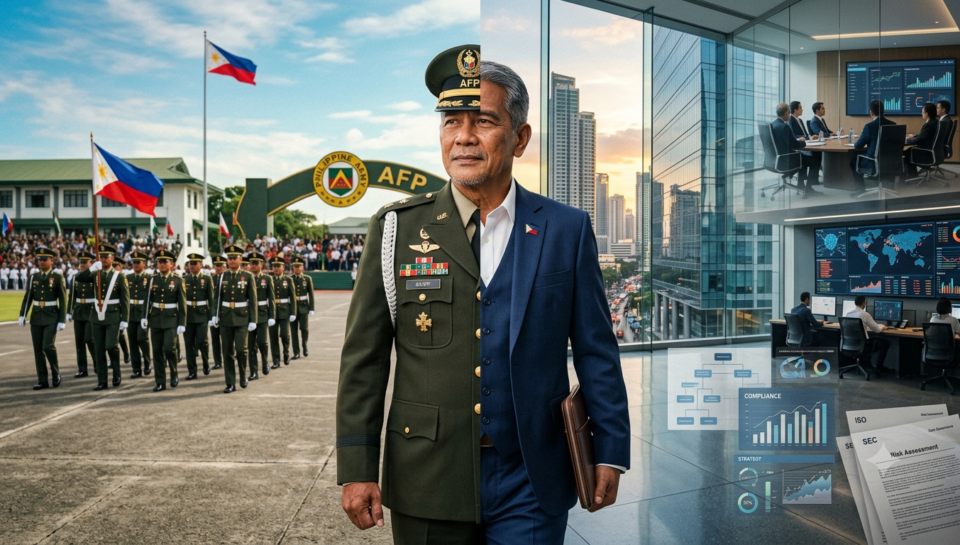
“The day you retire isn’t the day your mission ends. It’s the day your mission changes.”
There is a moment that every soldier, police officer, firefighter, coast guard officer, corrections officer, and public safety professional will eventually face.
It doesn’t happen during a promotion ceremony. It doesn’t happen during your last field exercise or your final command conference.
It happens quietly.
One morning, you wake up, put on civilian clothes, and realize that—for the first time in decades—you no longer have a uniform waiting for you.
No rank on your shoulders.
No badge on your chest.
No official authority attached to your name.
For some, it’s liberating.
For many, it’s unsettling.
Because for years—sometimes for more than three decades—the uniform wasn’t just something you wore.
It became part of your identity.
It represented discipline.
Purpose.
Responsibility.
Sacrifice.
It commanded respect before you even spoke.
And then, almost overnight, that chapter ends.
What comes next is a question that thousands of Filipino military personnel, police officers, firefighters, coast guard members, corrections officers, and government security professionals quietly ask themselves long before retirement papers are filed.
“What’s next?”
Not just financially.
Professionally.
Personally.
Who am I when I’m no longer “Colonel,” “Chief Inspector,” “Captain,” “Major,” or “Director”?
How do I continue contributing after leaving government service?
Can I still lead?
Can my experience still make a difference?
These are not questions of capability.
They are questions of transition.
Your rank earns respect. Your ability to create business value earns opportunity.
The Second Mission No One Really Prepares You For
Throughout a career in public service, professionals spend years preparing for operational challenges.
Leadership schools.
Command courses.
Specialized training.
Emergency response.
Intelligence.
Investigations.
Public safety.
National security.
Every stage of the journey is designed to prepare you for your next assignment.
Yet surprisingly little time is spent preparing for the assignment that inevitably comes to everyone:
Life after the service.
Retirement planning often focuses on pensions, benefits, investments, or family finances.
Those conversations are important.
But they rarely address another equally important question.
How do you transition from protecting the nation to protecting businesses, institutions, communities, and critical infrastructure?
Because while retirement marks the end of one career, it also opens the door to another.
Across the Philippines, retired officers are increasingly finding opportunities in:
- Corporate Security
- Enterprise Risk Management
- Business Continuity
- Safety Management
- Crisis Management
- Compliance
- Corporate Governance
- Security Consultancy
- Industrial Security
- Aviation Security
- Port and Maritime Security
- Healthcare Security
- Campus Security
- Event Security Management
The demand exists.
In fact, it is growing.
Organizations today face increasingly complex threats that extend far beyond theft and physical security.
Cybersecurity.
Business continuity.
Regulatory compliance.
Executive protection.
Data privacy.
Supply chain resilience.
Artificial intelligence.
Geopolitical risks.
Corporate investigations.
Reputation management.
The modern Security Director is no longer expected to simply deploy guards and respond to incidents.
They are expected to help organizations anticipate risk before it becomes crisis.
That is why many companies actively seek professionals with military and law enforcement backgrounds.
But there is an important reality that is rarely discussed openly.
Experience opens the door.
It does not automatically secure the position.
The Myth That Experience Alone Is Enough
For decades, uniformed service teaches leaders how to make decisions under pressure.
How to command teams.
How to maintain discipline.
How to manage crises where lives are on the line.
These are invaluable strengths.
They cannot be taught overnight.
Yet many highly accomplished officers encounter an unexpected challenge when they enter the corporate world.
They discover that leadership inside a boardroom feels very different from leadership inside a command post.
In military and law enforcement organizations, authority is clearly defined.
The chain of command provides structure.
Roles are established.
Orders are expected to be followed.
Corporate organizations operate differently.
Influence often matters more than authority.
Collaboration frequently produces better outcomes than command.
Decisions are shaped by business strategy, financial considerations, regulatory requirements, shareholder expectations, and organizational culture.
A Security Director may possess decades of operational experience, but still find themselves sitting in meetings with executives discussing topics they were rarely exposed to during government service.
Return on investment.
Enterprise risk.
Regulatory compliance.
Business continuity.
Corporate governance.
Data privacy.
Environmental, Social, and Governance (ESG) reporting.
Executive dashboards.
Board presentations.
Suddenly, security is no longer viewed as a standalone department.
It becomes one part of a much larger business ecosystem.
For many retirees, this realization comes as a surprise.
Not because they lack leadership.
But because they are entering a different leadership environment.
A Different Kind of Battlefield
Corporate security is not easier than public service.
It is simply different.
Instead of confronting armed threats, executives often confront competing priorities.
Budgets.
Compliance deadlines.
Operational disruptions.
Legal exposure.
Insurance requirements.
Public reputation.
Shareholder confidence.
Stakeholder expectations.
Security leaders in corporate organizations must learn to balance protection with productivity.
Risk with opportunity.
Compliance with innovation.
Every recommendation made by the security department carries financial implications.
Installing a new access control system.
Expanding CCTV coverage.
Increasing manpower.
Conducting emergency exercises.
Strengthening cybersecurity.
These decisions require more than operational expertise.
They require business justification.
A corporate executive is unlikely to approve a proposal simply because “it’s the safest option.”
They want to understand:
What risks does this mitigate?
How likely is the threat?
What is the return on investment?
What regulations require this?
What happens if we don’t act?
How does this affect business continuity?
These are business questions.
And modern security leaders must be prepared to answer them.
The Identity Shift
Perhaps the greatest challenge isn’t learning corporate language.
It’s redefining personal identity.
For years, respect came naturally because of the uniform.
The rank.
The institution.
The responsibility.
Inside a corporation, respect is earned differently.
Your title matters less than your ability to influence.
Your experience matters less than your ability to communicate it.
Your past achievements matter less than your ability to solve today’s business problems.
This can be difficult to accept.
Some retirees spend years trying to replicate the leadership style that served them well in uniform.
Others adapt.
The ones who succeed understand a simple truth.
They are not leaving leadership behind.
They are expanding it.
Their discipline remains valuable.
Their integrity remains valuable.
Their crisis management experience remains valuable.
Their ability to remain calm under pressure remains valuable.
But these strengths become even more powerful when combined with new competencies in governance, compliance, enterprise risk management, executive communication, and strategic decision-making.
The mission has changed.
So must the mindset.
A New Chapter, Not the End of the Story
Retirement is often described as the end of a career.
For many security professionals, it is anything but.
It is the beginning of a second career—one where decades of operational experience can create meaningful value in boardrooms, multinational corporations, critical infrastructure, hospitals, universities, financial institutions, manufacturing plants, and government-linked organizations.
The organizations of today are not simply looking for people who can respond to incidents.
They are looking for leaders who can prevent them.
Leaders who understand risk before it becomes crisis.
Leaders who can connect security with business strategy.
Leaders who can speak both the language of operations and the language of executives.
The good news is that many of the qualities developed in military and law enforcement service—discipline, integrity, resilience, decisiveness, and service before self—are exactly the qualities organizations need.
The challenge is learning how to translate those strengths into the corporate environment.
And that transition doesn’t happen by accident.
It happens through continuous learning, professional development, and a willingness to embrace a new way of leading.
Because when the uniform comes off, the mission doesn’t end.
It simply changes.
PASSMI • Certified Security & Safety Management Professional
Your Experience Earns Respect.
Your Leadership Education Opens Doors.
Prepare for your next mission with the
Certified Security & Safety Management Professional (CSSMP).
Gain executive-level competencies in governance, enterprise risk management,
regulatory compliance, crisis leadership, business continuity, and strategic
security management.
📅 July 20–24, 2026
🌐 Hybrid Learning Setup
July 20–23 — Online Sessions
July 24 — Face-to-Face in Ormoc City
(Final Examination • Project Defense • Graduation)
Know someone assigned in the Visayas?
Share this opportunity with your fellow military, police, fire, coast guard,
corrections, safety, and security professionals in Leyte, Samar, Cebu,
Negros, Bohol, Iloilo, and nearby provinces.
Coming Up in Part 2
Why do some retired generals, police officers, and senior commanders thrive in the corporate world while others struggle to land executive roles?
In Part 2, we’ll explore the biggest transition challenges, the skills companies are actually hiring for, and the leadership gap that many experienced professionals don’t discover until after they leave the service.
